简体中文     |      English     
Home > Books
Author
Title
Subject
Year

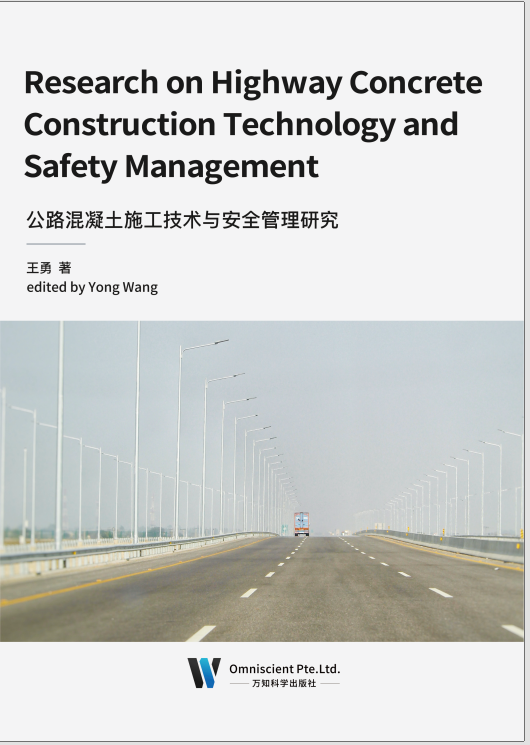
With the continuous development of society, the demand of highway construction in our country is also increasing. In order to promote the development of highway construction and the level of construction department, we have compiled a book Research on Highway Maintenance Technology and Project Management aiming at the development situation, development trend and sustainable use of highway in recent years, which is comprehensive and systematic. This paper summarizes the development prospect, highway maintenance and engineering project formulation and implementation of China’s expressway, and provides scientific basis for the development and construction of China’s expressway.

This book mainly describes the development of expressway in recent years, the overview of classification and technology of the highway, the detailed investigation and evaluation of the performance of the pavement asphalt roads, the in-depth discussion on the maintenance methods and maintenance decision-making for the long-term use of the expressway, the importance of improving the key technical level of road maintenance in China for the maintenance and long-term use of the highway, the formulation of a series of highway engineering projects, the rational design of highway construction scheme, the detailed research on the production factors of the project, the evaluation, formulation and feasibility study of construction projects. It also says that the preparation of the project proposal plays an important role in the improvement of the project, and the cost management of the project plays a supporting role in the project initiation and the construction stage.


前 言

随着社会进步的不断发展,我国公路建设的需求也在日益增加,为了促进我国公路建设的发展以及施工部门的水平提升,我们针对我国近年来高速公路的发展情况、发展趋势与公路持续性使用等问题,编写了《高速公路养护技术与工程项目管理研究》一书,全面系统的概述了我国高速公路的发展前景、公路养护以及工程项目制定与实施等问题,为我国高速公路的发展建设提供科学依据。

本书主要讲述:我国近年来高速公路的发展概况以及公路的分类与技术概述;详细调查与评价沥青公路路面的使用性能;针对高速公路长期使用的养护方法与养护决策进行深入探讨;我国道路维修的关键性技术水平提高对公路维护以及长期使用的重要性;制定一系列的公路工程项目,合理设计公路施工方案;针对工程项目生产要素进行详细研究;施工项目的评估、制定与可行性研究、项目建议书的编制对于工程项目的完善有重要作用;工程的造价管理在工程立项与施工阶段有着保障作用。

ISBN: 978-981-17-0400-0 Date of Publication: 2020
More


With the sustained and rapid development of China’s economy, the status and role of construction industry in the national economy is more prominent. Nowadays, the construction industry has been internationalized. No matter the materials, technologies, tools, specifications or even the signing of contracts, they should keep up with the trend of the times. With the development of the times, there is no doubt that the technicians in the field of construction have to learn and charge to be competent for the constantly changing technical work.

In the same way, it has been proved that those who master advanced science and technology and have a large number of skilled and skilled talents will be invincible in the fierce market competition. Unfortunately, skilled talents have become the bottleneck restricting the rapid development of our country, and senior blue collar workers have broken down. According to statistics, only 35% of skilled workers in China are senior workers, which is far from developed countries. With the vigorous implementation of green environmental awareness, green building construction has also been put on the agenda, which requires a higher quality and more accurate technical personnel to complete every link of the project construction. 

In the education of civil engineering, project management is the necessary basic knowledge for the managers engaged in civil engineering, and it is a compulsory course for the students majoring in engineering management in colleges and universities. The project management is carried out smoothly around the project objectives. Its purpose is to achieve the best results in cost, quality, duration and other aspects of the project through scientific management methods. A high level of management can bring good economic benefits to the project and successfully achieve the project objectives. The purpose of this book is to provide basic and practical teaching materials for students majoring in engineering management, help them learn the knowledge of construction project management, master the theory and method of project management, and cultivate their preliminary ability of project management in construction enterprises.


前 言


随着我国经济持续快速地发展,建筑业在国民经济中的地位和作用更加突出。如今,建筑业已走向国际化,无论料、技术、工具、规范,甚至合同的签订均要跟上时代的潮流。与时俱进,毋庸置疑,从事建筑领域的技术人员不得不进行学习和充电,才能胜任不断变化的技术工作。

同样,事实也证明,谁掌握了先进的科学技术并拥有大量技术娴熟、手艺高超的技能人才,谁就能在激烈的市场竞争中立于不败之地。可惜的是,技能人才已成为制约我国快速发展的瓶颈,高级蓝领出现了断层。据统计,我国技能工人中高级工只占 35%,与发达国家相比相差甚远。且随着绿色环保意识的大力推行,绿色建筑施工也被提上日程,这就要求在项目建设的每一个环节由素质更高更精准的技术人才来成。

在土木工程专业教育当中,工程项目管理是从事土木工程的管理人员必备的基础知识,是高等院校工程管理专业学生的必修课。工程项目管理是围绕工程项目目标顺利实施进行的,其目的是通过科学的管理方法,使工程项目成本、质量、工期三大目标及其他方面均取得最佳效果。较高的管理水平可以为项目带来良好的经济效益,顺利完成项目标。本书旨在为工程管理专业学生提供基础性和实用性相结合的教材, 帮助学生学习建设工程项目管理知识, 掌握工程项目管理的理论和方法,培养学生进行施工企业项目管理的初步能力。

ISBN: 978-981-17-0439-0 Date of Publication: 2020
More


Real estate construction and consumption, especially housing construction and consumption, has become a new economic growth point. Real estate holding and accelerating the cultivation and development of the housing rental market have become important aspects of the development of the real estate industry. The implementation of the housing system of rent and purchase simultaneously has become an important aspect of the housing policy, which is inseparable from the large amount of capital investment and related risk protection. As a result, the relationship between the real estate industry and the financial industry is getting closer and closer. Real estate finance is a branch of economics, which is a marginal discipline between real estate economics, money and banking, insurance and economic law. It is developed based on the basic theories and methods of these disciplines, and is a discipline that systematically discusses the theories and methods of real estate financial activities.
This article demonstrates the relationship between the real estate economics and management from multiple perspectives. First, the concept of real estate is explored. Second, the two most critical factors that affect the real estate economy—location and land rent are outlined.Then, it analyzes the actual factors that promote the development of the real estate economy; discusses in detail the investment behavior of the real estate. Furthermore, it fully analyzes the co-integration relationship of the development of the
real estate market, contrastive analyzes the planning and utilization of real estate and urban land deepen and clarifies the real estate property rights relationship, discusses the possibility of the existence of real estate market risks and the possibility of its management, and looking for effective measures for real estate low-carbon and low-carbon management.


前 言


房产建设和消费尤其是住房的建设和消费已经成为新的经济增长点,房地产持有和加快培育、发展住房租赁市场成为房地产行业发展的重要方面,租购并举的住房制度的实施成为住房政策的重要方面,而这些都离不开大量的资金投入和相关的风险保障,房地产业与金融业的关系因而越来越密切。房地产金融学是经济学科的一个分支,是一门介于房地产经济学、货币银行学、保险学和经济法学等学科之间的边缘学科。它是在这些学科的基本理论、基本方法的基础上发展起来的,是系统论述房地产金融活动的理论和方法的学科。
本文从多个角度论证了房地产经济与管理之间的关系:首先,对房地产相关概念展开探究;其次,将影响房地产经济最关键的两个因素——区位与地租,展开了相关内容的概述;再从促进房地产经济发展的现实因素等环节展开分析,对房地产的投资行为等内容展开了详细的讨论;再者,对房地产市场发展的协整关系进行了充分分析;对房地产用地及其城镇土地用地的规划利用展开对照分析;对房地产产权关系进行深化与明确,探讨房地产市场风险存在的可能性及其风险管理的可能性展开分析;寻找房地产低碳与低碳管理的有效措施。

ISBN: 978-981-17-0426-0 Date of Publication: 2020
More

The fundamental purpose of project management is to meet or exceed the requirements and expectations of all parties concerned. Different stakeholders of the project have different requirements and expectations for the project. For example, the owner wants to obtain the maximum profit with the minimum investment, the contractor expects to obtain the maximum profit with the minimum cost and requires to expand employment and improve social benefits and etc. The fundamental purpose of project management is to maximize the project objectives and overall benefits, and to meet and even exceed these different requirements and expectations to the maximum extent.

The construction cost of construction project refers to the monetary form of the transfer value of the means of production consumed by the construction enterprise in the process of taking the project as the cost accounting object and the value created by the necessary labor of the workers. It is the sum of all production costs incurred in the construction of a project, including the amortization or rental cost of the main and auxiliary materials, components and parts, turnover materials, construction machinery shift or rental cost, wages and bonuses paid to the production workers, and all expenses incurred by the project management department (or branches, engineering offices) for organizing and managing the construction of the project.

The cost management of construction project is based on the overall goal of construction enterprises and specific requirements of the project. During the implementation of the project, the project cost is effectively controlled and other management activities, so as to achieve the purpose of strengthening the management, improving the cost management system, improving the cost accounting level, reducing the project cost and creating good economic benefits. Strengthening the cost management of engineering projects is the only way for construction enterprises to accumulate financial resources and enhance their competitiveness.


前 言

项目管理的根本目的是满足或超越项目有关各方对项目的要求与期望。项目的不同利益相关者对项目有着完全不同的要求和期望。如业主要求以最小的投资获得最大的收益,承包商期望以最小的成本获得最大的利润,要求扩大就业和提高社会效益等。项目管理的根本目的是要努力实现项目目标和项目总体效益最大化,并最大限度地满足这些不同的要求和期望,甚至超越这些要求和期望。

建筑工程施工项目成本是指建筑企业以项目作为成本核算对象的施工过程中,所耗费的生产资料转移价值和劳动者必要劳动所创造价值的货币形式。它是某项目在施工中所发生的全部生产费用的总和,包括所消耗的主、辅材料,构配件,周转材料的摊销费或租赁费,施工机械的台班费或租赁费,支付给生产工人的工资、奖金以及项目经理部(或分公司、工程处)为组织和管理工程施工所发生的全部费用支出。

建筑工程施工项目成本管理是根据建筑企业的总体目标和工程项目的具体要求,在工程项目实施过程中,对工程项目成本进行有效的控制等管理活动,以达到强化经营管理,完善成本管理制度,提高成本核算水平,降低工程成本,创造良好经济效益的目的。加强工程项目成本管理是施工企业积蓄财力,增强企业竞争力的必由之路。

ISBN: 978-981-14-6149-1 Date of Publication: 2020
More

As a special commodity, the quality of construction products has always been concerned by people. With the development of the society and the progress of the times, people’s demand and expectation for the construction engineering are higher and higher. Therefore, the State formulates and modifies and improves the current codes, regulations and application standards from design to construction, building materials, project quality supervision and supervision, and various local and industry also formulates corresponding codes and specifications, which provides a reliable guarantee for standardizing construction market behavior and controlling project quality. 

Construction quality and inspection is a very important work in project management, is the lifeline of construction enterprises, and is related to the survival and development of enterprises. This book fully responds to the call of “high quality development” of the country, adheres to the compilation principle of “clear goal, appropriate system, innovative content, concise and comprehensive”, and is compiled by organizing in-depth study and understanding of current specifications, procedures and standards on the basis of earnestly summarizing many years of engineering practice experience.

This book follows the development of the times, and it is close to the engineering practice. It strives to be fully based and concise. It summarizes problems in concise and popular language, and tries to avoid blindly piling up theoretical articles and simply quoting normative items. This book is written in combination with the standards, quality and safety analysis and prevention and control measures are carried out around the relevant standards; combined with the reform and development trend of the engineering construction industry, it enables readers to understand the new trend, new technology and new requirements of the quality and safety management of construction projects, and constantly broaden their knowledge.

In the process of compiling this book, we have referred to a large number of documents, and hereby we sincerely thank the relevant authors. The references are listed at the end of the book. Due to the limited level of editors and the rush of time, there are inevitably omissions and irregularities in the book. Readers are welcome to criticize and correct them.


前 言

建筑产品作为一种特殊商品,其产品质量历来受到人们的关注。随着社会的发展和时代的进步,人们对建筑工程的需求和期望越来越高。为此,国家制定和修改、提高现行的从设计到施工、建筑材料、工程质量监理、监督的规范、规程和应用标准,各地方和行业也制定相应的规程和规范,对规范建筑市场行为、控制工程质量提供了可靠的保证。

建筑工程施工质量与检测是项目管理中十分重要的工作,是建筑企业的生命线,关系企业的生存与发展。本书充分响应国家“高质量发展”的号召,坚持“目标明确、体系合适、内容创新、言简意赅”的编写原则,在认真总结多年工程实践经验的基础上,深入学习和理解现行各种规范、规程和标准组织编写而成。

本书紧跟时代发展,贴近工程实践,内容力求依据充分,简明扼要,以精练通俗的语言总结问题,尽量避免盲目堆砌理论性的条文和简单引用规范的条目。本书编写结合规范标准,质量与安全分析和防控措施都围绕相关规范标准展开;结合工程建设行业改革发展趋势,让读者了解建筑工程质量与安全管理的新趋势、新技术、新要求,不断开阔知识面。

本书在编写过程中参考了大量的文献资料,在此对相关作者致以诚挚的谢意,参考文献列于书末。由于编者水平有限,加之时间仓促,书中难免存在疏漏与不妥之处,敬请读者批评指正。

ISBN: 978-981-14-6137-8 Date of Publication: 2020
More